Buy krton.com ?
We are moving the project
krton.com .
Are you interested in purchasing the domain
krton.com ?
domain@kv-gmbh.de · 0541-91531010
Buy krton.com ?
What is the difference between organic and eco-friendly products?
Organic products are made from ingredients that are grown without the use of synthetic pesticides, herbicides, or fertilizers, and are often certified by a regulatory body. Eco-friendly products, on the other hand, are designed to have minimal impact on the environment throughout their entire lifecycle, from production to disposal. While organic products focus on the natural ingredients used, eco-friendly products consider the overall environmental impact of the product. In essence, organic products focus on the ingredients, while eco-friendly products focus on the entire product lifecycle. **
Is organic sustainable?
Organic farming practices can be more sustainable than conventional methods in terms of reducing chemical inputs, promoting biodiversity, and improving soil health. However, there are challenges to the scalability and efficiency of organic farming, which can impact its overall sustainability. For example, organic farming typically requires more land and labor to produce the same amount of food as conventional methods, which can limit its ability to meet global food demand. Additionally, the transportation and distribution of organic products can have a higher environmental impact due to their shorter shelf life and the need for refrigeration. Overall, while organic farming has many sustainable benefits, there are also limitations to its long-term sustainability on a large scale. **


Similar search terms for Cuisinart-Velocity-Ultra-Blender
Top-Angebote
Products related to Cuisinart-Velocity-Ultra-Blender:
-
Cuisinart Smart Stick® 2-Speed Hand BlenderBlending and mixing have never been smarter! The Cuisinart® Smart Stick™ Two-Speed Hand Blender has a new, higher 300-watt motor that blends smoothies and purees soups in seconds, easily powering through even heavy-duty tasks.61,49 $*Shipping: 0,00 $Secure redirect to the provider



-
How are linear velocity, angular velocity, and frequency related?
Linear velocity, angular velocity, and frequency are all related through the equation v = ωr, where v is linear velocity, ω is angular velocity, and r is the radius of the rotating object. Angular velocity is the rate at which an object rotates around a fixed point, while linear velocity is the rate at which an object moves in a straight line. Frequency is the number of complete rotations or cycles per unit of time and is related to angular velocity by the equation f = ω/2π. Overall, these three quantities are interconnected and can be used to describe the motion of rotating objects. **
-
What is the difference between instantaneous velocity and average velocity?
Instantaneous velocity refers to the velocity of an object at a specific moment in time, while average velocity is the total displacement of an object over a given time interval divided by the total time taken. Instantaneous velocity gives us information about the object's velocity at a particular instant, while average velocity provides an overall picture of the object's velocity over a period of time. In essence, instantaneous velocity is like looking at a snapshot of an object's motion, while average velocity is like looking at the entire video. **
-
How are orbital velocity and centripetal acceleration related in natural science?
In natural science, orbital velocity and centripetal acceleration are related in the context of objects in orbit around a central body, such as a planet or a star. Orbital velocity is the speed at which an object must travel in order to maintain a stable orbit, while centripetal acceleration is the acceleration directed towards the center of the orbit that keeps the object in its circular path. These two quantities are related through the equation for centripetal acceleration, which is equal to the square of the orbital velocity divided by the radius of the orbit. This relationship shows that as the orbital velocity increases, the centripetal acceleration required to maintain the orbit also increases. **
-
What is instantaneous velocity?
Instantaneous velocity is the velocity of an object at a specific moment in time. It is the rate at which an object's position changes with respect to time at a particular instant. Unlike average velocity, which is calculated over a period of time, instantaneous velocity provides information about an object's speed and direction at a single point in time. **


What is enzyme velocity?
Enzyme velocity refers to the speed at which an enzyme catalyzes a specific chemical reaction. It is a measure of how quickly the enzyme converts substrate into product. Enzyme velocity is often determined by measuring the rate of formation of the product or the rate of disappearance of the substrate over a specific period of time. This velocity is influenced by factors such as enzyme concentration, substrate concentration, and temperature. **
What is cosmic velocity?
Cosmic velocity refers to the speed at which an object is moving through the universe, typically in the context of celestial bodies such as stars, planets, and galaxies. It is a measure of the velocity at which an object is traveling through the vast expanse of space. Cosmic velocity can vary greatly depending on the specific object and its location within the universe. Understanding cosmic velocity is important for studying the dynamics and movement of celestial bodies in space. **
Top-Angebote
Products related to Cuisinart-Velocity-Ultra-Blender:
-
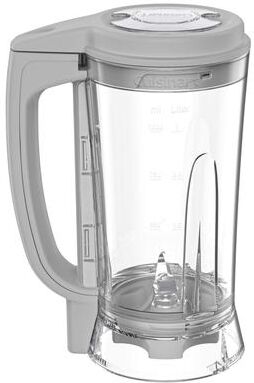
Cuisinart Velocity Ultra Blender/Food Processor with Travel CupsThis Cuisinart Blender/ Food Processor will make your life easier and more nutritious. It's two included travel cups make storage and portability easy so you can take care of the rest of your day.189,95 $*Shipping: 0,00 $Secure redirect to the provider
-
What is the difference between organic and eco-friendly products?
Organic products are made from ingredients that are grown without the use of synthetic pesticides, herbicides, or fertilizers, and are often certified by a regulatory body. Eco-friendly products, on the other hand, are designed to have minimal impact on the environment throughout their entire lifecycle, from production to disposal. While organic products focus on the natural ingredients used, eco-friendly products consider the overall environmental impact of the product. In essence, organic products focus on the ingredients, while eco-friendly products focus on the entire product lifecycle. **
-
Is organic sustainable?
Organic farming practices can be more sustainable than conventional methods in terms of reducing chemical inputs, promoting biodiversity, and improving soil health. However, there are challenges to the scalability and efficiency of organic farming, which can impact its overall sustainability. For example, organic farming typically requires more land and labor to produce the same amount of food as conventional methods, which can limit its ability to meet global food demand. Additionally, the transportation and distribution of organic products can have a higher environmental impact due to their shorter shelf life and the need for refrigeration. Overall, while organic farming has many sustainable benefits, there are also limitations to its long-term sustainability on a large scale. **
-
How are linear velocity, angular velocity, and frequency related?
Linear velocity, angular velocity, and frequency are all related through the equation v = ωr, where v is linear velocity, ω is angular velocity, and r is the radius of the rotating object. Angular velocity is the rate at which an object rotates around a fixed point, while linear velocity is the rate at which an object moves in a straight line. Frequency is the number of complete rotations or cycles per unit of time and is related to angular velocity by the equation f = ω/2π. Overall, these three quantities are interconnected and can be used to describe the motion of rotating objects. **
-
What is the difference between instantaneous velocity and average velocity?
Instantaneous velocity refers to the velocity of an object at a specific moment in time, while average velocity is the total displacement of an object over a given time interval divided by the total time taken. Instantaneous velocity gives us information about the object's velocity at a particular instant, while average velocity provides an overall picture of the object's velocity over a period of time. In essence, instantaneous velocity is like looking at a snapshot of an object's motion, while average velocity is like looking at the entire video. **
Similar search terms for Cuisinart-Velocity-Ultra-Blender
-
Cuisinart Smart Stick® 2-Speed Hand BlenderBlending and mixing have never been smarter! The Cuisinart® Smart Stick™ Two-Speed Hand Blender has a new, higher 300-watt motor that blends smoothies and purees soups in seconds, easily powering through even heavy-duty tasks.61,49 $*Shipping: 0,00 $Secure redirect to the provider
-
Uplift Essentials Natural Bamboo Eco Friendly Toothbrush 10 Piece Sustainable Family Pack Natural Bamboo Eco Friendly Toothbrush 10 Piece Sustainable Family PackTransition to a greener routine with this Natural Bamboo Toothbrush Set, a premium collection of bamboo products designed to reduce environmental impact without compromising on performance. Each handle is crafted from 100% sustainable bamboo,...37,97 $*Shipping: 0,00 $Secure redirect to the provider
-
How are orbital velocity and centripetal acceleration related in natural science?
In natural science, orbital velocity and centripetal acceleration are related in the context of objects in orbit around a central body, such as a planet or a star. Orbital velocity is the speed at which an object must travel in order to maintain a stable orbit, while centripetal acceleration is the acceleration directed towards the center of the orbit that keeps the object in its circular path. These two quantities are related through the equation for centripetal acceleration, which is equal to the square of the orbital velocity divided by the radius of the orbit. This relationship shows that as the orbital velocity increases, the centripetal acceleration required to maintain the orbit also increases. **
-
What is instantaneous velocity?
Instantaneous velocity is the velocity of an object at a specific moment in time. It is the rate at which an object's position changes with respect to time at a particular instant. Unlike average velocity, which is calculated over a period of time, instantaneous velocity provides information about an object's speed and direction at a single point in time. **
-
What is enzyme velocity?
Enzyme velocity refers to the speed at which an enzyme catalyzes a specific chemical reaction. It is a measure of how quickly the enzyme converts substrate into product. Enzyme velocity is often determined by measuring the rate of formation of the product or the rate of disappearance of the substrate over a specific period of time. This velocity is influenced by factors such as enzyme concentration, substrate concentration, and temperature. **
-
What is cosmic velocity?
Cosmic velocity refers to the speed at which an object is moving through the universe, typically in the context of celestial bodies such as stars, planets, and galaxies. It is a measure of the velocity at which an object is traveling through the vast expanse of space. Cosmic velocity can vary greatly depending on the specific object and its location within the universe. Understanding cosmic velocity is important for studying the dynamics and movement of celestial bodies in space. **
* All prices are inclusive of VAT and, if applicable, plus shipping costs. The offer information is based on the details provided by the respective shop and is updated through automated processes. Real-time updates do not occur, so deviations can occur in individual cases. ** Note: Parts of this content were created by AI.